Strategies & Realities
Success is not a decision in the boardroom.
But a change in people.
Strategy needs to emerge from reality — and aim to change it.
Otherwise it‘s just fluff.

Hello!
I help organizational leaders to develop and implement strategies.
Strategy is an exercise of clarity and focus. In analysis, intent and execution.
It’s about recognizing what is relevant and make it work.
Creating the winning strategy often comes down to applied sociology. It’s going beyond looking at numbers. But to understand that market data are reflections of attitudes and behaviour. They are reflections of the relationships people form with the world and the identities they encounter. Understanding these dynamics and actual human behaviour builds strategies that work in reality.
I prefer to work with organizations, not for them.
I believe in collaboration and the powerful chain reaction from mixing internal and external people, knowledge and ideas.
Just reach out! I’m always open to share a thought.
Expect curiousity, clarity and the right amount of provocation.
What’s on your mind?
Reach out if …
-

you think about your brand
Most brand projects start with the wrong question. It’s not how you want to be perceived — it's who you actually are, and whether your organisation interprets that in a relevant way, consistently.
A brand is not a communication tool. It's the operating system of your strategy: the identity that gives your decisions coherence, your people direction, and your customers a reason to choose you over everyone else.
-

You want to grow the top line
Growth strategies fail when they treat markets as numbers to be moved. Markets are people — with habits, loyalties, and specific reasons to switch. The right go-to-market approach starts by understanding what motivates people and how to position yourself in the right demand space.
Brand equity and new market dynamics can reinforce each other powerfully — but only when both are understood with clarity.
-

You manage a portfolio
A portfolio without architecture is just a collection of products. The strategic question is how each brand relates to the others — what it owns distinctively, what it shares, and where conflict or cannibalisation is silently eroding value.
Getting this right requires looking at both internal resource allocation and the way customers actually experience and attribute meaning to individual brands.
Architecture is what makes a portfolio legible — to the market, and to yourself.
-

You want a cultural shift in your organisation
Culture is not the soft part of strategy. It is strategy — enacted daily, by the people inside your organisation.
Any transformation that doesn't engage the human dimension will stall, regardless of how sound the logic is. Whether the context is technological change, M&A integration, or a shift in purpose: the decisive factor is always whether people understand what's changing, why it matters, and how they belong to it.
-

Your marketing needs to work harder
The problem is rarely the campaigns. It's the lack of alignment upstream. When business strategy, brand, sales, and product development operate with different assumptions, no amount of media budget fixes the disconnect. Marketing works hardest when it's organised around a shared idea — a brand as operating system that synchronises effort across functions.
Without that, you're optimising execution while the strategy leaks.
-

You want to communicate effectively
In a media environment built on indifference, the question isn't how to be louder. It's how to be worth listening to. That requires a different kind of strategy — one built around experience rather than exposure, around positions worth occupying rather than messages worth repeating.
The most effective communication doesn't interrupt people and force them down a funnel. It meets them at the moment they're already paying attention.
-

You want to build an effective Agency Setup
Agency setups are under pressure to deliver — and their design today determines your success in the future. Organizations have to think about in-house vs. external, human vs. AI, consistency vs. agility: these aren't binary choices, they're tensions to be managed strategically.
The ideal setup depends on your actual ambition, your culture, and your ability to integrate external partners as genuine collaborators — not vendors executing a brief.
-

You want to share a thought over Lunch
Good conversations don't need an agenda. They just need an open mind and a curious person across the table.
I’m in. Bring a question, a challenge, or nothing at all.
“I needed someone whom (…) I could work with informally and in complete confidence, someone with intellectual integrity to go with moral integrity, emotional intelligence to go with IQ, and the courage to tell the emperor when he was wearing no clothes.”
A.G. Lafley, Playing to Win

On Strategy
Strategy is often seen as an exercise in complexity: The more content, the better.
That’s not right.
Strategy is about focus.
About judgement to identify what is relevant.
About the willingness to sacrifice.
About determination in execution.
What a good strategy needs:
Clear Analysis
A thorough analysis of all data to get to a diagnosis of the situation, providing a clear understanding of the challenge.
Strategic Intent
A single minded guiding principle or policy that will influence all behavior and distribution of resources going forward.
Translating Action
A set of coherent actions that translates the Strategic Intent into actual programs and measurable outcomes.
I have worked with leading brands and Organisations
from various industries.
Some engagements were global.
and some local.
Some were projects.
and others covered many years of joint work.
Curious about specific expertise or personal references? Let me know!
AMD Akademie Mode Design, AOK, Audi, Ballantines, Bitburger, Barilla, BMW, babymarkt.de, BASF, Bayer, BOSCH Hausgeräte/BSH, CARIAD, DDB, Design Offices, Deutsche Bank, Dumont, Ebay, Edeka, Elli (by Volkswagen), Eucerin, EY, FCB, GIZ, GWA Gesamtverband Kommunikationsagenturen Deutschland, Interpublic, Jim Beam, Jung von Matt, Kraft Foods, Lindt, Lufthansa, Mercedes, Mercator Institute for China Studies, MINI, NIVEA, Otto Group, Omnicom, phrase.com, Polestar, Porsche Consulting, Rheinische Post, Riverty, Roland Berger, Rolls-Royce Motor Cars, Samsung, Schwarz Digits - Stackit / XM Cyber, Siemens, SKP, Soennecken, Sony, StrawberryFrog, Tchibo, TUI, TLGG, Unilever, Volkswagen, Volkswagen Group, Vodafone, Wella, Würth Elektronik, ZAW Zentralverband der Deutschen Werbewirtschaft and others.
Library

Kein BOSS-Move
Marke, Marketing, Spieltheorie. Und eine Deutsche Markenikone.
Hier steht, wie alles zusammenhängt.
(Zuerst veröffentlicht bei HORIZONT, April 2026)

Jaguar: The Cat Makes Prey
The Jaguar Rebrand is one of the most discussed brands stories of 2025. Here's my take on it. (Originally German, published in HORIZONT Magazine)

Strategies Create Realities
For the shock of a second Trump term — better blame Democrats!
(Published November 2024 after the election)

Die Neuerfindung der CSR
Wie das Konzept der CXR Verantwortung eine zentrale Rolle gibt — und damit Unternehmenstransformation fördert und Wettbewerbsfähigkeit stärkt.
(Published in Forum Nachhaltig Wirtschaften 2020)
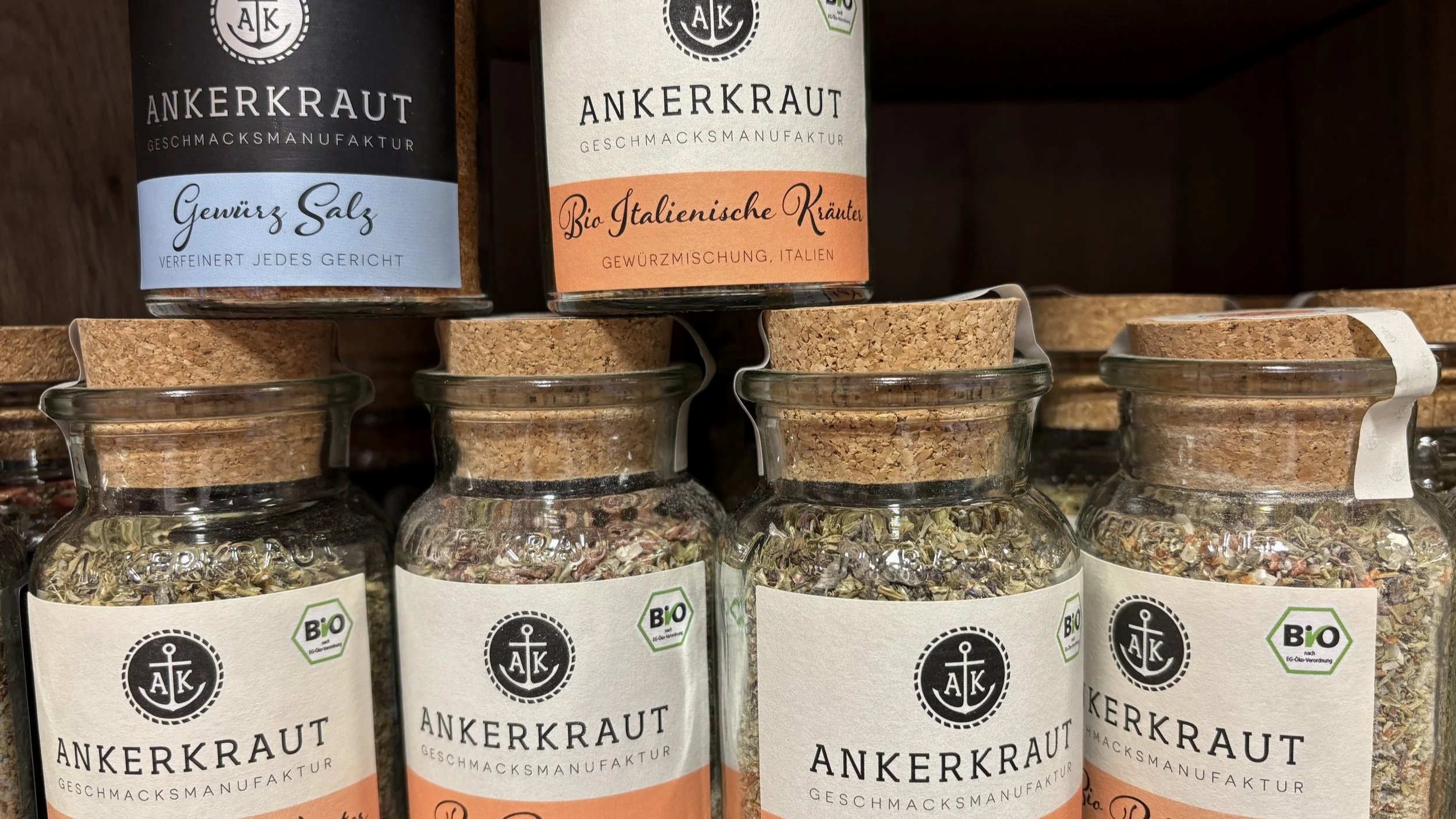
Gründerromantik skaliert nicht
Über Ankerkraut, Nestlé und Brand Stories ohne Rückgrat.
(Originally published 2023 in HORIZONT Magazine Germany)

Transformation: Crash
Why transformation goes wrong and what differentiates Micro Strategies from Macro Strategies
(Originally published 2020 in HORIZONT Magazine Germany)

Von Brand Safety zu Brand Integrity: Elon zwingt zum Weiterdenken.
Elon, die Werbekunden, und wieviel Verantwortung braucht überhaupt ein Mediaplan?
(Originally published in HORIZONT Magazine Germany Dez 2022)
Contact
Imprint
Legal notice & privacy policy
Information pursuant to § 5 DDG (German Digital Services Act) and § 2 DL-InfoV
pjmahrenholz.com
Proprietor: Peter John Mahrenholz
Isestrasse 59, 20149 Hamburg, Germany
Telephone: (+49) 173-2338637
Email: mail@pjmahrenholz.com
Privacy Policy & Data Protetion (DE extended)
General information
The following notice provides a concise overview of what happens to your personal data when you visit this website. Personal data means any information by which you can be personally identified. Comprehensive details regarding data protection are set out in the full privacy policy below.
Data collection on this website
Who is responsible for data collection on this website? Data processing on this website is carried out by the website operator. The operator's contact details are set out in section 2 below ("Controller").
How do we collect your data? Some data is collected when you provide it to us directly — for example, by entering information into a contact form or sending an email. Other data is collected automatically by our IT systems when you visit the website. This primarily includes technical data such as your internet browser, operating system, and the time of your page request. This data is collected automatically as soon as you access the website.
What do we use your data for? A portion of the data is collected to ensure the proper functioning of the website. Other data may be used to analyse visitor behaviour.
What rights do you have regarding your data? You have the right at any time to obtain information, free of charge, about the origin, recipient, and purpose of your stored personal data. You also have the right to request the correction or deletion of such data. If you have given consent to data processing, you may revoke that consent at any time with effect for the future. You also have the right, under certain circumstances, to request the restriction of the processing of your personal data. Furthermore, you have the right to lodge a complaint with the competent supervisory authority. You may contact us at any time regarding these or any other questions on the subject of data protection.
Privacy at a glance
The controller responsible for data processing on this website is:
Peter John Mahrenholz
Isestrasse 59, 20149 Hamburg Germany
Telephone: (+49) 173-2338637
The controller is the natural or legal person who, alone or jointly with others, determines the purposes and means of the processing of personal data.
Controller
General information and mandatory disclosures / Data protection
Data protection
The operator of this website takes the protection of your personal data seriously. We treat your personal data confidentially and in accordance with applicable data protection legislation as well as this privacy policy. When you use this website, various items of personal data are collected. This privacy policy explains what data we collect and what we use it for. It also explains how and for what purpose this occurs. Please note that data transmission over the internet (for example, communication by email) may involve security vulnerabilities. Complete protection of data against access by third parties is not possible.
Storage period
Unless a more specific storage period has been stated within this privacy policy, your personal data will remain with us until the purpose for data processing ceases to apply. If you submit a legitimate request for deletion or revoke your consent to data processing, your data will be deleted unless we have other legally permissible grounds for storing your personal data (such as retention periods required by tax or commercial law); in the latter case, deletion will take place once those grounds no longer apply.
Legal basis for data processing on this website
Where you have consented to data processing, we process your personal data on the basis of Article 6(1)(a) GDPR, or Article 9(2)(a) GDPR where special categories of data within the meaning of Article 9(1) GDPR are processed. Where you have consented to the storage of cookies or access to information on your device (for example, via device fingerprinting), data processing is additionally carried out on the basis of § 25(1) TDDDG. Consent may be revoked at any time. Where your data is required for the performance of a contract or for pre-contractual measures, we process your data on the basis of Article 6(1)(b) GDPR. We also process your data where this is necessary to fulfil a legal obligation, on the basis of Article 6(1)(c) GDPR. Data processing may furthermore be carried out on the basis of our legitimate interest pursuant to Article 6(1)(f) GDPR. The specific legal basis applicable in each individual case is set out in the following sections of this privacy policy.
Transfer of data to the United States and other third countries
We use, among other things, tools provided by companies based in the United States or other third countries that may not offer an adequate level of data protection. When these tools are active, your personal data may be transferred to and processed in such third countries. Please note that a level of data protection comparable to that of the EU cannot be guaranteed in these countries. For example, US companies are obligated to release personal data to security authorities without the data subject being able to take legal action against this. It cannot therefore be ruled out that US authorities (such as intelligence services) may process, evaluate, and permanently store your data located on US servers for surveillance purposes. We have no influence over these processing activities.
Revocation of your consent to data processing
Many data processing operations are only possible with your express consent. You may revoke consent that has already been given at any time. The lawfulness of any data processing carried out prior to the revocation remains unaffected by the revocation.
Right to object to data collection in specific cases and to direct marketing (Article 21 GDPR)
Where data processing is based on Article 6(1)(e) or (f) GDPR, you have the right at any time to object to the processing of your personal data on grounds relating to your particular situation; this also applies to profiling based on those provisions. The respective legal basis on which processing is based is set out in this privacy policy. If you lodge an objection, we will no longer process the personal data concerned unless we can demonstrate compelling legitimate grounds for the processing that override your interests, rights, and freedoms, or the processing serves the establishment, exercise, or defence of legal claims (objection pursuant to Article 21(1) GDPR).
Where your personal data is processed for the purpose of direct marketing, you have the right to object at any time to the processing of personal data concerning you for the purpose of such marketing; this also applies to profiling insofar as it is related to such direct marketing. If you object, your personal data will subsequently no longer be used for the purpose of direct marketing (objection pursuant to Article 21(2) GDPR).
Right to lodge a complaint with a supervisory authority
In the event of infringements of the GDPR, data subjects have the right to lodge a complaint with a supervisory authority, in particular in the member state of their habitual residence, their place of work, or the place of the alleged infringement. This right exists without prejudice to any other administrative or judicial remedy.
The supervisory authority responsible for the operator is:
Der Hamburgische Beauftragte für Datenschutz und Informationsfreiheit Ludwig-Erhard-Str. 22, 7th floor 20459 Hamburg Germany Email: mailbox@datenschutz.hamburg.de
Right to data portability
You have the right to have data that we process automatically on the basis of your consent or in performance of a contract handed over to you or to a third party in a commonly used, machine-readable format. If you request the direct transfer of data to another controller, this will only take place insofar as it is technically feasible.
SSL/TLS encryption
For security reasons and to protect the transmission of confidential content — such as enquiries you send to us as the website operator — this site uses SSL or TLS encryption. You can recognise an encrypted connection by the fact that the address bar of your browser changes from "http://" to "https://" and by the lock symbol in your browser bar. When SSL or TLS encryption is activated, the data you transmit to us cannot be read by third parties.
Right of access, deletion, and rectification
Within the framework of the applicable statutory provisions, you have the right at any time to obtain information free of charge about your stored personal data, its origin and recipients, the purpose of data processing, and — where applicable — the right to rectification or deletion of such data. You may contact us at any time regarding these or any other questions on the subject of personal data.
Right to restriction of processing
You have the right to request the restriction of the processing of your personal data. You may contact us at any time to exercise this right. The right to restriction of processing applies in the following cases: (i) if you contest the accuracy of your personal data stored by us, we generally need time to verify this, and you have the right to request the restriction of processing during the verification period; (ii) if the processing of your personal data was or is unlawful, you may request the restriction of data processing instead of deletion; (iii) if we no longer need your personal data but you require it for the establishment, exercise, or defence of legal claims, you have the right to request restriction of processing instead of deletion; (iv) if you have lodged an objection pursuant to Article 21(1) GDPR, a balancing exercise between your interests and ours must be carried out, and you have the right to request restriction of processing until the outcome of that balancing exercise is determined.
Where you have restricted the processing of your personal data, such data may — apart from being stored — only be processed with your consent or for the establishment, exercise, or defence of legal claims, or for the protection of the rights of another natural or legal person, or for reasons of important public interest of the European Union or of a member state.
Objection to unsolicited emails
The use of contact data published under the obligation to provide a legal notice for the purpose of sending unsolicited advertising and information materials is hereby expressly prohibited. The operators of this website expressly reserve the right to take legal action in the event of the unsolicited sending of advertising information, such as spam emails.
Data collection on this website
Contact by email, telephone, or fax
If you contact us by email, telephone, or fax, your enquiry — including all personal data arising therefrom (name, content of enquiry) — will be stored and processed by us for the purpose of handling your request. We will not share this data without your consent. The processing of this data is based on Article 6(1)(b) GDPR insofar as your enquiry relates to the performance of a contract or is necessary for the implementation of pre-contractual measures. In all other cases, the processing is based on our legitimate interest in the effective handling of enquiries addressed to us (Article 6(1)(f) GDPR) or on your consent (Article 6(1)(a) GDPR) where such consent has been requested. The data you send to us via contact enquiries will remain with us until you request deletion, revoke your consent to storage, or the purpose for data storage ceases to apply (for example, after your enquiry has been fully resolved). Mandatory statutory provisions — in particular statutory retention periods — remain unaffected.
Server log files
The provider of this website automatically collects and stores information in server log files, which your browser transmits to us automatically. These are: browser type and version, operating system used, referrer URL, hostname of the accessing device, time of the server request, and IP address. This data is not merged with other data sources. The collection of this data is based on Article 6(1)(f) GDPR. The website operator has a legitimate interest in the technically error-free presentation and optimisation of its website — for this purpose, server log files must be recorded.
Squarespace
This website is hosted by Squarespace, Inc., 225 Varick Street, 12th Floor, New York, NY 10014, USA ("Squarespace").
When you visit this website, Squarespace collects various log files including your IP address, browser type, operating system, referring website, time of access, and other technical data. Details of Squarespace's data processing practices are available in its privacy policy at: https://www.squarespace.com/privacy
The use of Squarespace is based on Article 6(1)(f) GDPR. We have a legitimate interest in a reliable and professional presentation of our website. Where consent has been requested, processing is carried out exclusively on the basis of Article 6(1)(a) GDPR and § 25(1) TDDDG.
Data transfer to the United States: Squarespace, Inc. is certified under the EU-US Data Privacy Framework and thereby provides an adequate level of data protection in accordance with Article 45 GDPR. Additionally, standard contractual clauses (SCCs) approved by the European Commission are incorporated into the contractual relationship. A data processing agreement (Auftragsverarbeitungsvertrag) is in place with Squarespace in accordance with Article 28 GDPR. Squarespace's data processing addendum is available at: https://www.squarespace.com/dpa
Hosting
Google Analytics
This website uses Google Analytics, a web analytics service provided by Google Ireland Limited, Gordon House, Barrow Street, Dublin 4, Ireland ("Google"). Google Analytics uses cookies — text files stored on your device — that enable an analysis of your use of the website.
The information generated by the cookie about your use of this website is generally transferred to a Google server in the USA and stored there. Google is certified under the EU-US Data Privacy Framework. IP anonymisation is activated on this website, meaning that your IP address is truncated by Google within member states of the European Union or in other states party to the Agreement on the European Economic Area before being transmitted to the US.
On behalf of the operator of this website, Google will use this information to evaluate your use of the website, compile reports on website activity, and provide the website operator with further services relating to website and internet usage.
The IP address transmitted by your browser as part of Google Analytics will not be merged with other Google data. You may prevent the storage of cookies by adjusting your browser software settings accordingly; however, please note that in this case you may not be able to use all features of this website in full. You may also prevent Google from collecting the data generated by the cookie relating to your use of the website (including your IP address) and from processing such data by downloading and installing the browser plugin available at: https://tools.google.com/dlpage/gaoptout
The use of Google Analytics is based on Article 6(1)(f) GDPR. The website operator has a legitimate interest in analysing user behaviour to optimise both its website and its marketing. Where consent has been obtained (for example, consent to the storage of cookies), processing is carried out exclusively on the basis of Article 6(1)(a) GDPR and § 25(1) TDDDG. Consent may be revoked at any time.
Further information on data processing by Google is available in Google's privacy policy at: https://policies.google.com/privacy
Analytics
Cookies and consent management
This website uses cookies. Cookies are small text files that are stored on your device and saved by your browser. They serve to make our offering more user-friendly, effective, and secure.
Essential cookies are required for the basic functioning of the website and are stored on the basis of Article 6(1)(f) GDPR and § 25(2)(2) TDDDG. The website operator has a legitimate interest in storing essential cookies to provide a technically error-free and optimised service.
Analytics and non-essential cookies (such as those set by Google Analytics or Squarespace Analytics) are only stored with your prior consent on the basis of Article 6(1)(a) GDPR and § 25(1) TDDDG.
When you first visit this website, a cookie consent banner will ask for your consent before non-essential cookies are set. You may revoke or modify your consent at any time through your browser settings or by clearing cookies. Blocking all cookies may limit the functionality of this website.
For a detailed list of cookies set by Squarespace, please refer to: https://support.squarespace.com/hc/en-us/articles/360001264507
We maintain a profile on the LinkedIn platform. The provider is LinkedIn Ireland Unlimited Company, Wilton Place, Dublin 2, Ireland. LinkedIn is certified under the EU-US Data Privacy Framework.
When you visit our LinkedIn page, the operator of the social network may collect and process personal data. We cannot rule out the possibility that LinkedIn may transfer data to its parent company, LinkedIn Corporation, or to Microsoft Corporation in the United States or other third countries.
When users interact with us through our LinkedIn presence, we process any data communicated to us in order to respond to enquiries. This constitutes our legitimate interest; the legal basis is Article 6(1)(f) GDPR.
LinkedIn's privacy policy is available at: https://www.linkedin.com/legal/privacy-policy
For users in the European Economic Area, LinkedIn's regional privacy notice is available at: https://www.linkedin.com/legal/privacy/eu
You may adjust your privacy settings, advertising preferences, and the use of your data by LinkedIn for advertising purposes directly within your LinkedIn account settings. You can also opt out of data analysis of your usage behaviour as set out in LinkedIn's settings.
Social Media
Changes to this privacy policy
We reserve the right to amend this privacy policy with effect for the future. A current version is always available on this page.
Note for website visitors from Germany
This website stores information on the devices of website visitors (for example, cookies) and accesses information already stored on those devices (for example, IP addresses). The specific information involved is set out in the sections above.
This storage and access takes place on the following basis: insofar as such storage or access is strictly necessary to provide the service expressly requested by the website visitor (for example, to ensure the IT security of the website), it is carried out on the basis of § 25(2)(2) TDDDG. In all other cases, such storage or access is carried out on the basis of the website visitor's consent (§ 25(1) TDDDG).
Last updated: April, 2026